A 30-DAY PIVOT THAT
SAVED THE BUSINESS
MY ROLE
End-to-end Product Designer
TIMELINE
1 month
STACK
Figma, FigJam, Material Design 3, Confluence
IMPACT
Beta delivered on Day 30 — validated by fashion professionals, B2C model proven viable, company operations preserved
OVERVIEW
The Doris App emerged from a survival pivot. With the widget product failing to scale, the company faced closure. I identified the opportunity to shift toward a B2C mobile experience — a "style wizard" delivering personalized fashion recommendations and creating a new revenue stream through brand partnerships. I designed the entire product from scratch, in 4 weeks.
THE CHALLENGE
Prove a new business model was viable before funding ran out — with no existing product, no visual identity, and no room for slow iteration.
THE PROBLEM
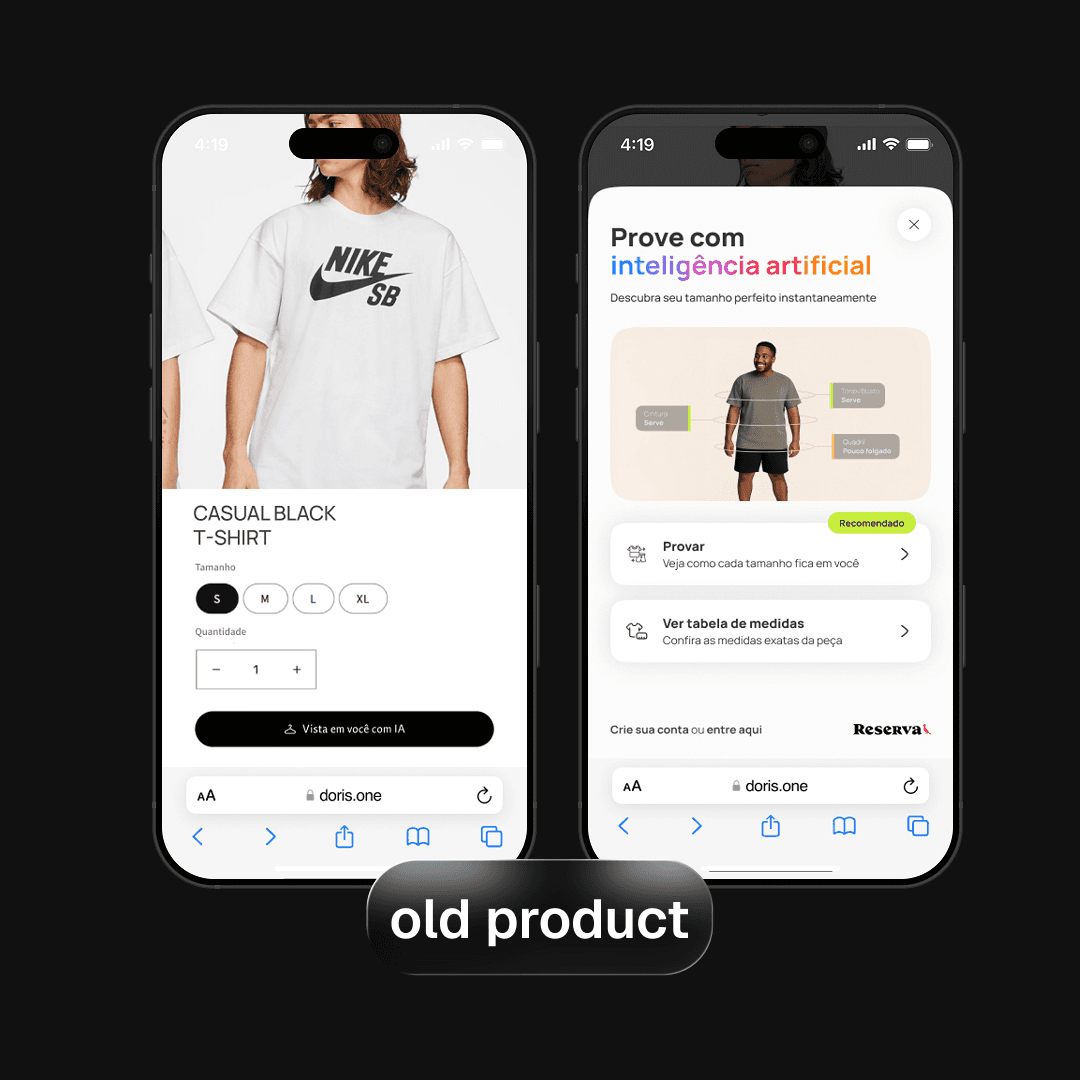
The widget model hit a ceiling. Three gaps made the pivot inevitable:
No personalization layer: The widget showed clothes but didn't guide users. No styling logic, no preference data, no reason to return.
No B2C revenue path: No mechanism to monetize end users or attract brand partnerships.
No product-market fit signal: Without a real user-facing product, there was nothing to validate with the market.
"The tech existed. The product didn't."
THE SOLUTION
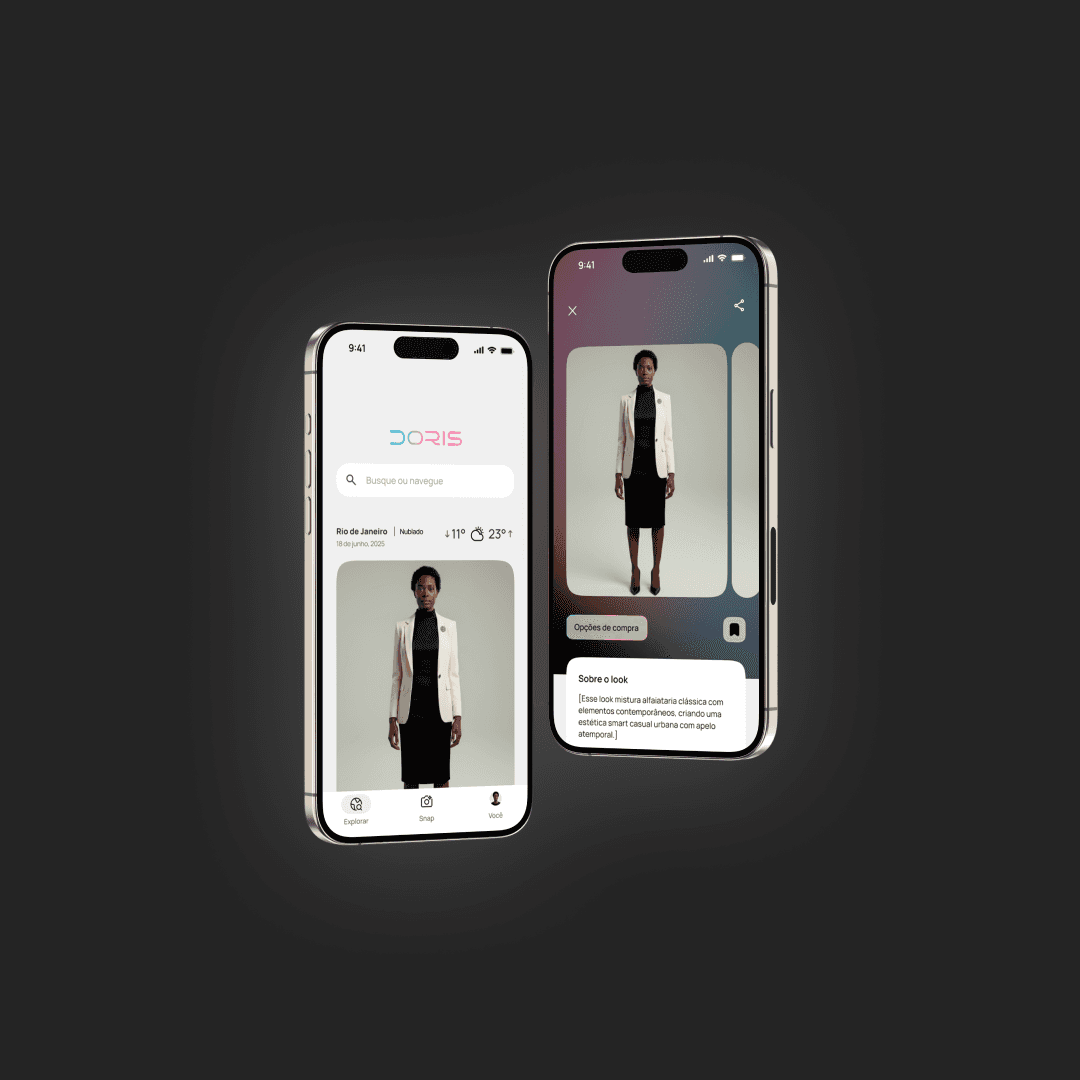
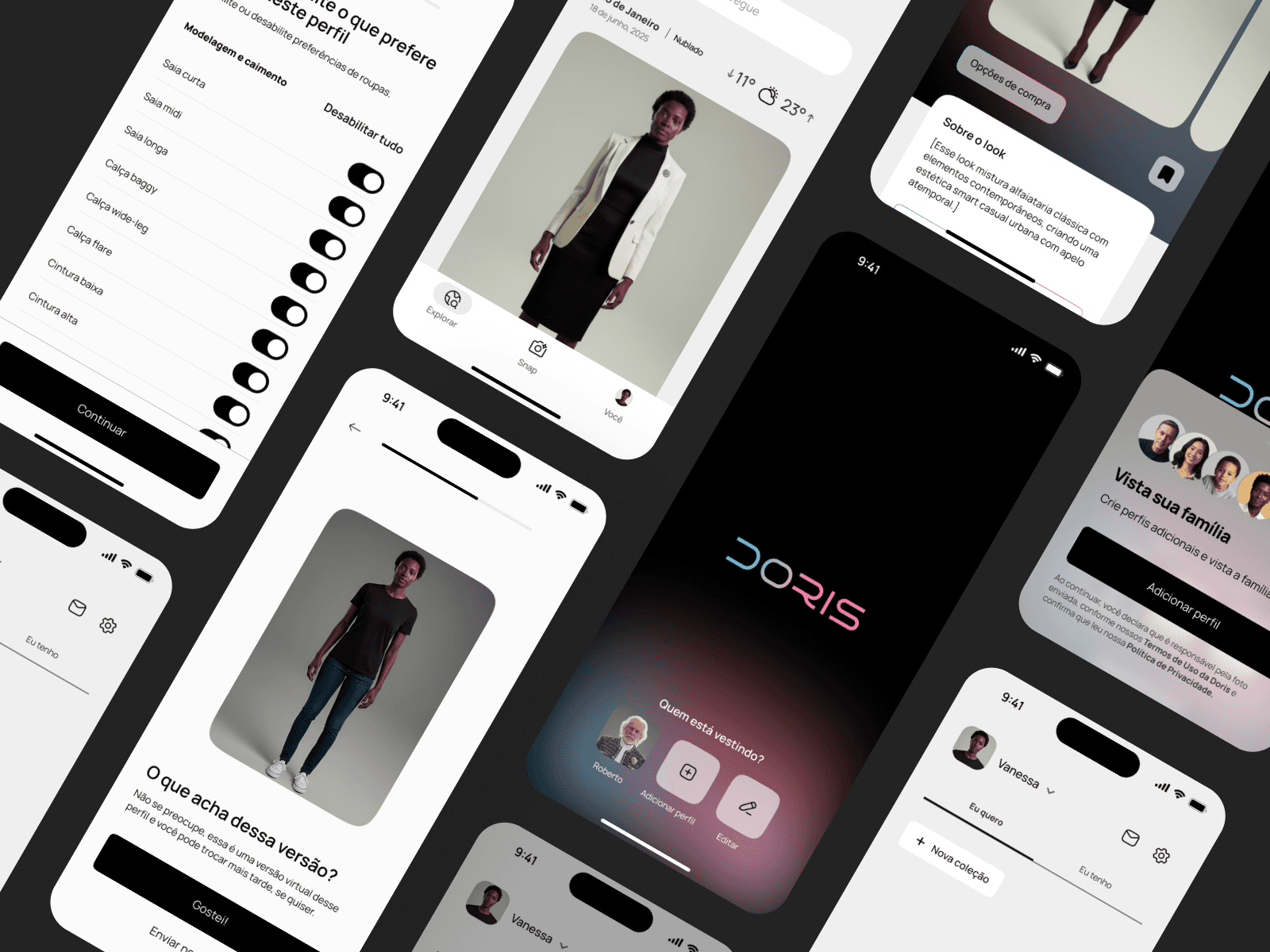
Inclusive onboarding: Research showed fashion preferences are increasingly non-binary. I replaced the binary gender selector with a style-first flow — users mix categories based on identity, not labels.
Geolocation precision: In cities like São Paulo, temperatures vary significantly by neighborhood. I sourced weather data at neighborhood level to make outfit suggestions contextually accurate, not just regionally approximate.
Closet as data layer: Scoped to individual item logging to hit the deadline — but designed with a larger purpose. The closet captures wardrobe preferences, building a scalable intelligence layer with real B2B monetization potential.
KEY DECISIONS
Replaced long instructions with a 3-second full-screen animation showing body movement cues.
Instant Feedback: Added visual “pulses” and micro-interactions so users know exactly when the mirror “sees” them.
ONLY WORRKS ON DESKTOP
sorry :P
RESULTS
The redesign transformed the Doris Mirror from a “confusing screen” into a high-performing sales tool.
+85% Approval
Increase in Virtual Try-On adoption.
VIABLE B2C
model proven, company operations preserved.
DAY 30
delivered on schedule.
A 30-DAY PIVOT THAT
SAVED THE BUSINESS
MY ROLE
End-to-end Product Designer
TIMELINE
1 month
STACK
Figma, FigJam, Material Design 3, Confluence
IMPACT
Beta delivered on Day 30 — validated by fashion professionals, B2C model proven viable, company operations preserved
OVERVIEW
The Doris App emerged from a survival pivot. With the widget product failing to scale, the company faced closure. I identified the opportunity to shift toward a B2C mobile experience — a "style wizard" delivering personalized fashion recommendations and creating a new revenue stream through brand partnerships. I designed the entire product from scratch, in 4 weeks.
THE CHALLENGE
Prove a new business model was viable before funding ran out — with no existing product, no visual identity, and no room for slow iteration.
THE PROBLEM
The widget model hit a ceiling. Three gaps made the pivot inevitable:
No personalization layer: The widget showed clothes but didn't guide users. No styling logic, no preference data, no reason to return.
No B2C revenue path: No mechanism to monetize end users or attract brand partnerships.
No product-market fit signal: Without a real user-facing product, there was nothing to validate with the market.
"The tech existed. The product didn't."
THE SOLUTION
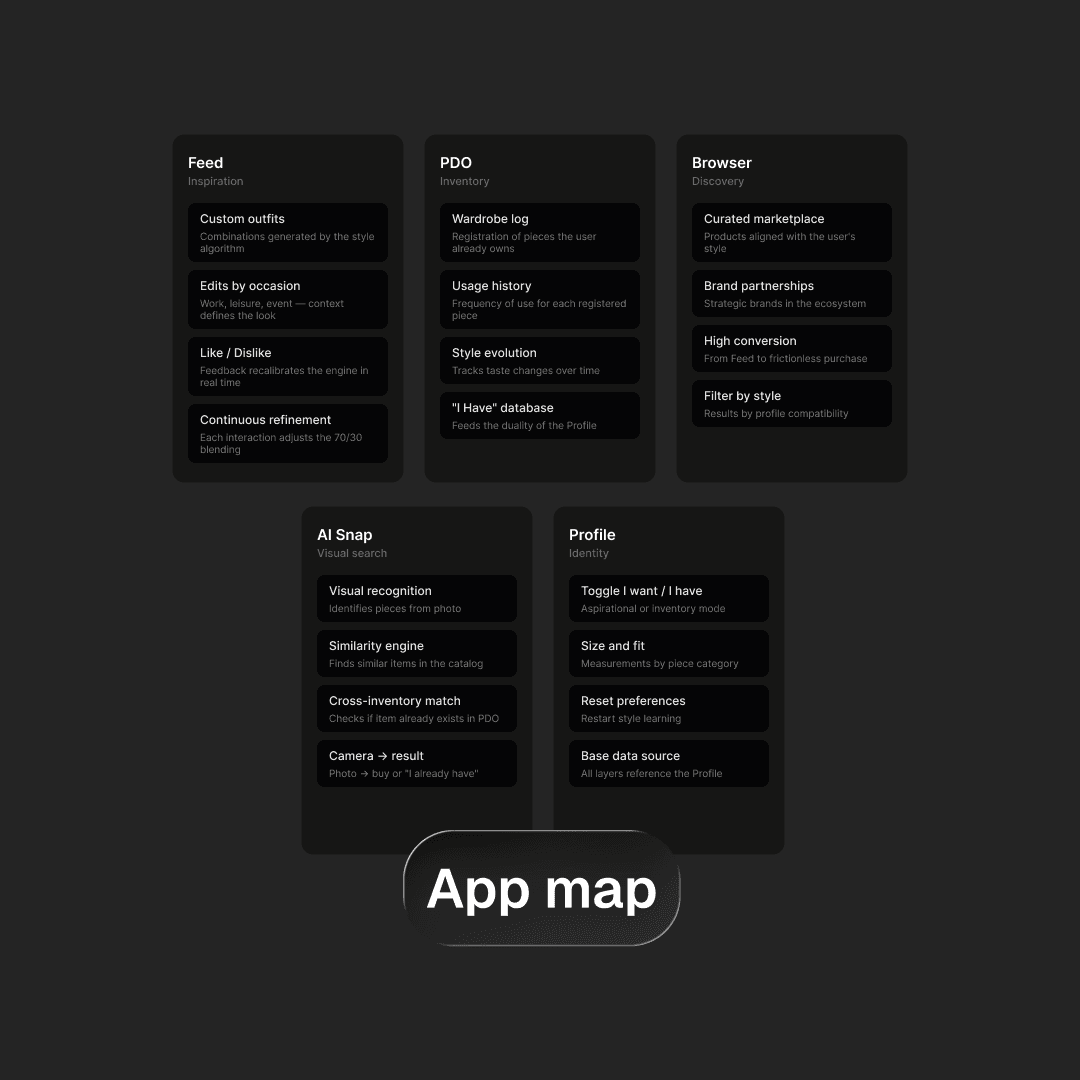
Shifted from a visualization tool to a data engine based on the insight that users seek guidance over discovery.
Logic: Onboarding captures high-intent data through preference elimination.
Framework: Grounded in Seven Universal Styles for personalized blending
Mapping the New Flow
KEY DECISIONS
Inclusive onboarding: Research showed fashion preferences are increasingly non-binary. I replaced the binary gender selector with a style-first flow — users mix categories based on identity, not labels.
Geolocation precision: In cities like São Paulo, temperatures vary significantly by neighborhood. I sourced weather data at neighborhood level to make outfit suggestions contextually accurate, not just regionally approximate.
Closet as data layer: Scoped to individual item logging to hit the deadline — but designed with a larger purpose. The closet captures wardrobe preferences, building a scalable intelligence layer with real B2B monetization potential.
RESULTS
The redesign transformed the Doris Mirror from a "confusing screen" into a high-performing sales tool.
85% Approval
from fashion professionals during testing.
VIABLE B2C
model proven, company operations preserved.
DAY 30
delivered on schedule.